About

Why this blog exists, and how it approaches AI, society, and the future of intelligence.
A close-up, photographic image of a sleek, matte-black tablet lying on a light concrete desk, its screen showing a calm, abstract representation of AI reasoning as layered translucent shapes, not circuitry. Beside it, a small stack of sticky notes with faintly visible but unreadable scribbles and a mechanical pencil rest casually, suggesting active thinking. Soft morning sunlight from the left creates gentle highlights along the tablet’s edge and long, delicate shadows across the desk. The background dissolves into a soft bokeh of shelves and plants, evoking a modern, intelligent workspace. Shot at a low, side angle with shallow depth of field, the mood is focused yet approachable, reflecting considered analysis about AI in everyday life.
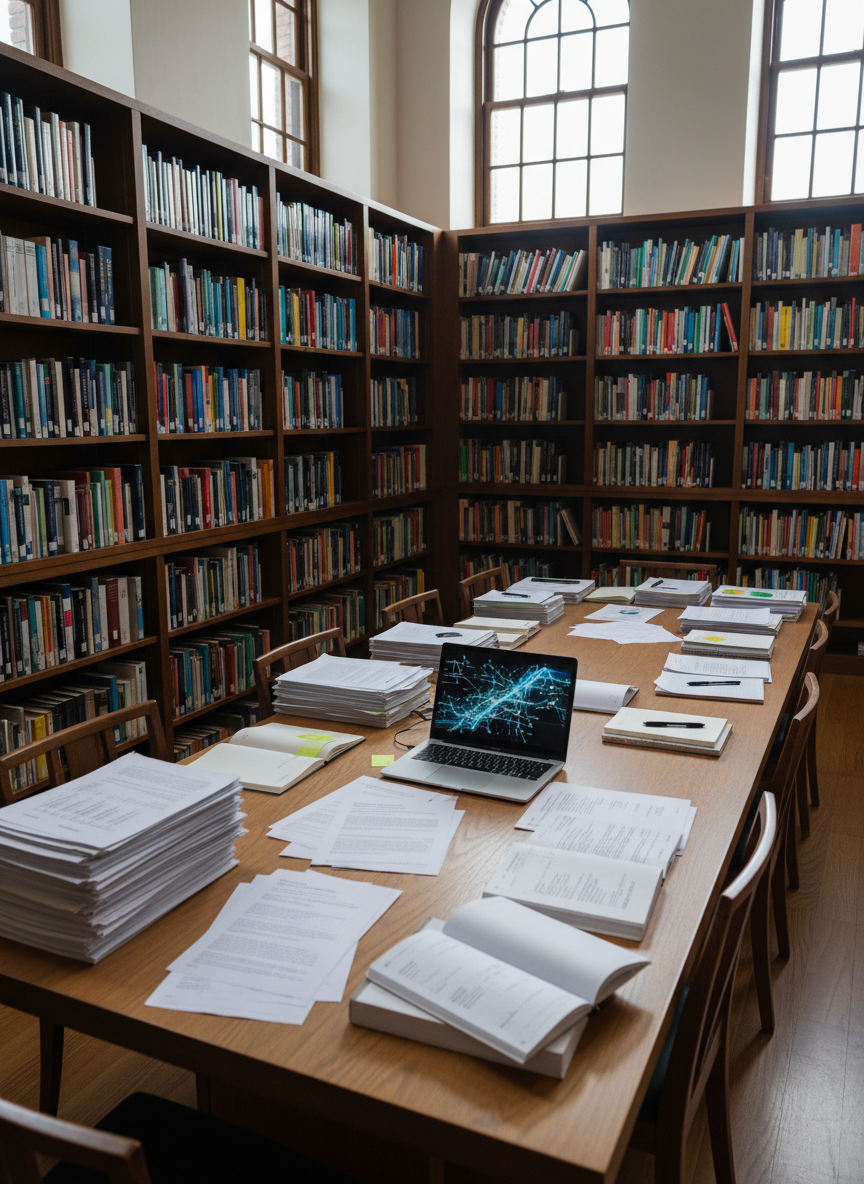
An elegant, minimalist library-like room lined with tall bookshelves filled with diverse, colorful spines, and in the center a large oak table covered with carefully arranged printed research papers and an open laptop. On the laptop screen, a complex but non-technical data pattern glows softly, suggesting AI-assisted insight. Diffused overcast light filters through high windows, casting soft, even illumination and understated shadows across the table surface. The mood is reflective and intellectual, with photographic realism. Captured from a slightly elevated angle using the rule of thirds, the composition draws the eye from the foreground documents into the depth of shelves, symbolizing the bridge between human knowledge and machine intelligence.

Considered perspectives on intelligence

Considered Intelligence is my home for slow, rigorous thinking about AI, shaped by years moving between classrooms, startups, and large companies in the US and New Zealand, and by a long-term curiosity about how intelligence reshapes society.

About

Michael Witbrock is a professor of computer science at the University of Auckland, where he directs the Strong AI Lab and co-directs the NAOInstitute. His work spans machine learning, reasoning, natural language understanding, and the design of AI systems that can use knowledge more reliably. Before returning to Aotearoa New Zealand, he held research and leadership roles in US industry, including at IBM Research and Cycorp. He writes about how increasingly capable AI can be made more useful, trustworthy, and beneficial—both in practice and in its wider effects on society.
LinkedInGoogle ScholarUoA staffX

A meticulously organized modern workspace with a slim, dark metal laptop open on a walnut desk, its screen displaying an abstract visualization of interconnected ideas rather than code or circuits. Around it lie neatly stacked notebooks, a fountain pen, and a small, sculptural glass paperweight shaped like a branching thought. The scene is set near a large window overlooking a softly blurred cityscape. Late afternoon natural light streams in, creating gentle highlights on the laptop edges and subtle reflections in the glass. Photographic realism with a calm, contemplative atmosphere, shot at eye level with a shallow depth of field, emphasizing thoughtful AI-driven work without any people or robotic imagery.